The story of React
React, the Anti-Counterfeiting Network, is a not-for-profit organisation that has fought counterfeit trade for more than 30 years. About 350 companies are members, from sportswear and luxury houses to car makers, electronics and toys: adidas, Chanel, Samsung, Hermès, Audi and hundreds more.
Its network reaches 128 countries and works in 45 languages. Online, React's teams track down fake products and the sellers behind them. Offline, they work with customs, investigators and lawyers to take the goods out of circulation.

The challenge
Counterfeits are sold everywhere at once: on marketplaces, on social media and in stand-alone web shops, in dozens of countries and languages. When a listing comes down, the seller often comes back under a new account or a new domain.
Much of the work still ran by hand. Finding listings, capturing evidence, writing notices to each platform and following up took time, while counterfeiters moved faster and at a larger scale every year. React needed one system that finds infringements, sorts them and acts on them, for every member at once.
What we built
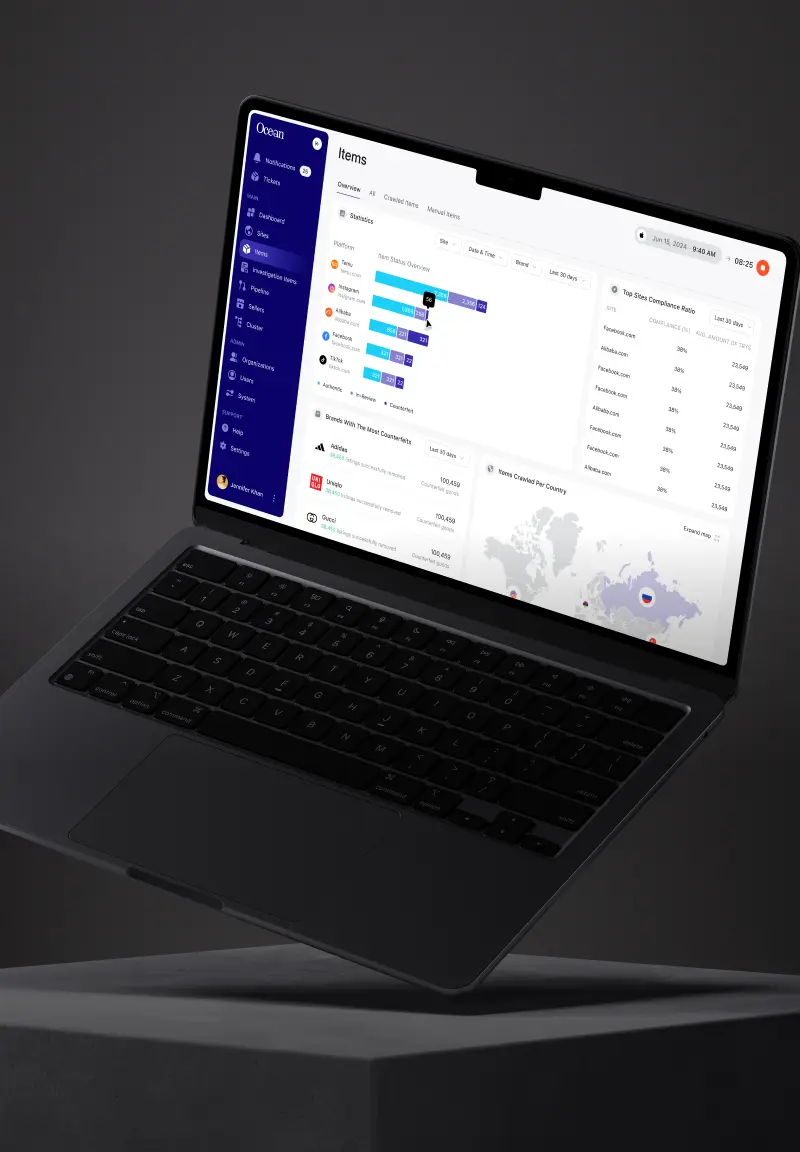
Ocean is the platform React's teams and members now work in every day. Crawlers search marketplaces, search engines, social media and web shops around the clock for each member's brands and images. Three AI models we trained ourselves recognise logos, trademarks and text on product photos, and language models do the first screening, so analysts spend their time on the cases that need judgement.
Notices go out automatically, through the platforms' own systems or by email, and Ocean follows each one until the listing is gone. For the bigger picture there is Octopus AI, an investigation assistant that links sellers, web shops and listings into networks, so a team can see who is behind a cluster of fakes and take it offline as well as online.
Members follow it all in their own portal and in the Ocean app for iOS and Android: what was found, what was removed, and where the counterfeits come from.